Inside the Journal of Technology Law & Policy’s new special edition, tied to the 13th Annual UF Law E-Discovery Conference
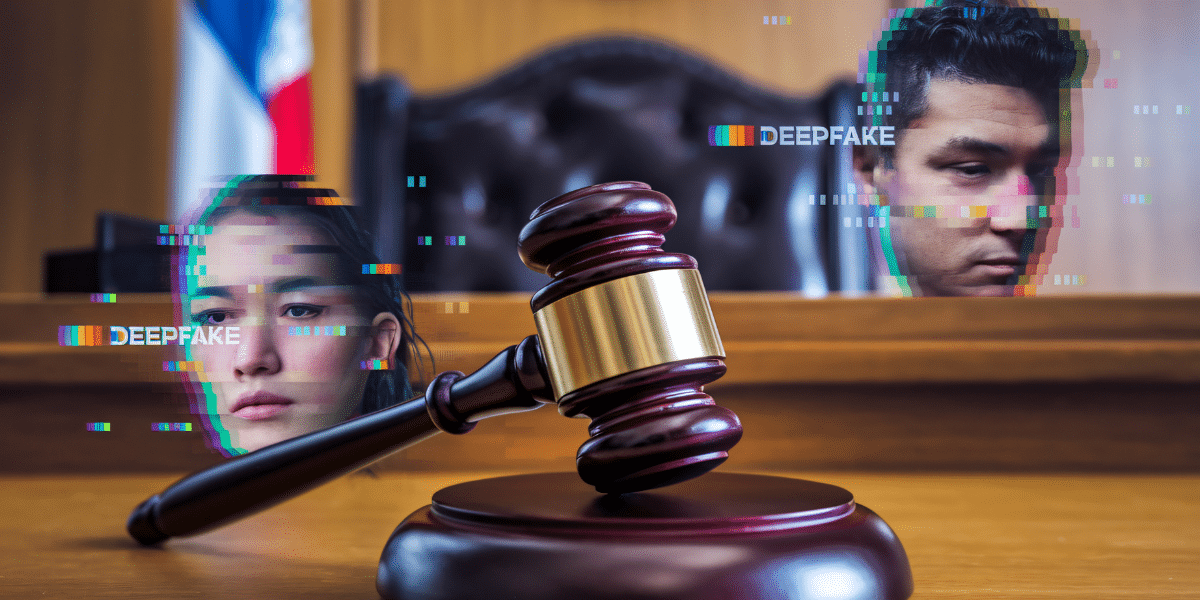
Deepfaked evidence. AI-generated victim impact statements. Fabricated expert citations that slip past opposing counsel entirely. These aren’t hypotheticals anymore; they’re the opening act of the Journal of Technology Law & Policy’s new special edition, tied to the 13th Annual UF Law E-Discovery Conference. Five articles from judges, scholars, and practitioners connected to the conference dig into the questions every litigator is quietly losing sleep over.
Start with Chief Magistrate Judge William Matthewman’s front-row account of AI evidence already infiltrating courtrooms, then his blueprint for fixing it: ten proposed rule changes, from mandatory pretrial AI notice to a rethought Rule 901 authentication standard.
Then there’s the question nobody’s discovery plan is ready for: who actually controls the data on an employee’s personal phone? Judge Xavier Rodriguez takes apart the courts’ two competing tests, finds both broken for the BYOD era, and proposes a better approach.
Is AI making good lawyers better and bad lawyers worse…at the same time? Ralph Artigliere, David Horrigan, and Rose Hunter Jones call it a “force multiplier” for the profession, amplifying skill where it exists and error where oversight doesn’t, and map out how legal education and judicial training can close the gap before it hardens.
William F. Hamilton brings in Hannah Arendt to make the case that e-discovery was never just a technical process. It’s how litigation recovers a shared factual world, and AI can illuminate that world but never judge it for you.
And two practitioner teams bring the receipts. Aron Ahmadia, Nathan Reff, Matthew Reiber, Chad Roberts, and Cristin Traylor hand over the statistical playbook for proving an AI-assisted review holds up in court. Robert Keeling, Ray Mangum, Amy Hanke, and Alyssa Ogden go further, benchmarking a leading GenAI review tool against human reviewers on a real 1,600-document matter. The result: 83.9% recall, 84.7% precision, and a clear-eyed look at where it still falls short.
These five articles offer a working playbook for anyone navigating discovery, evidentiary admissibility, or document review in the age of generative AI. Read the full special edition (or jump straight to the PDF), then mark your calendar for the 14th Annual UF Law E-Discovery Conference, February 10–11, 2027, with pre-conference sessions on February 9th.