It’s 4:47 p.m. on a Friday. Your biggest client has fired its other law firm after a missed court-ordered production deadline and wants you to take over. You inherit 40 custodians, Slack threads, WhatsApp voice notes, and Copilot outputs. A legal hold somehow never went out. Opposing counsel expects a meet-and-confer Monday morning.
Do you issue the hold immediately? Call opposing counsel? Start preserving whatever you can? And how much can you responsibly commit to before you understand what went wrong?
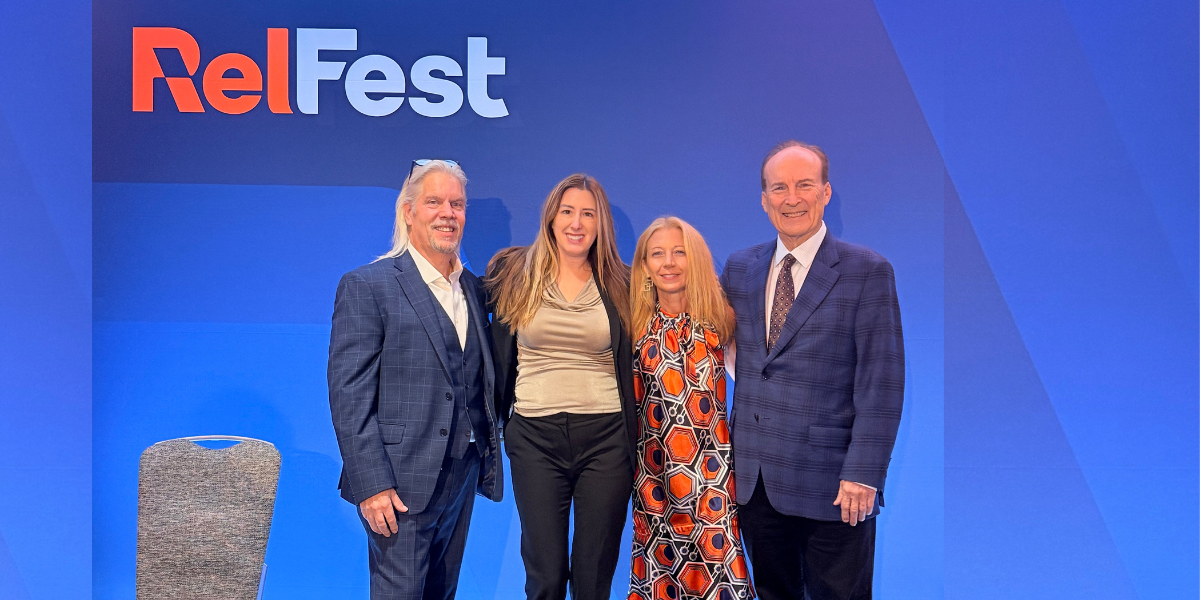
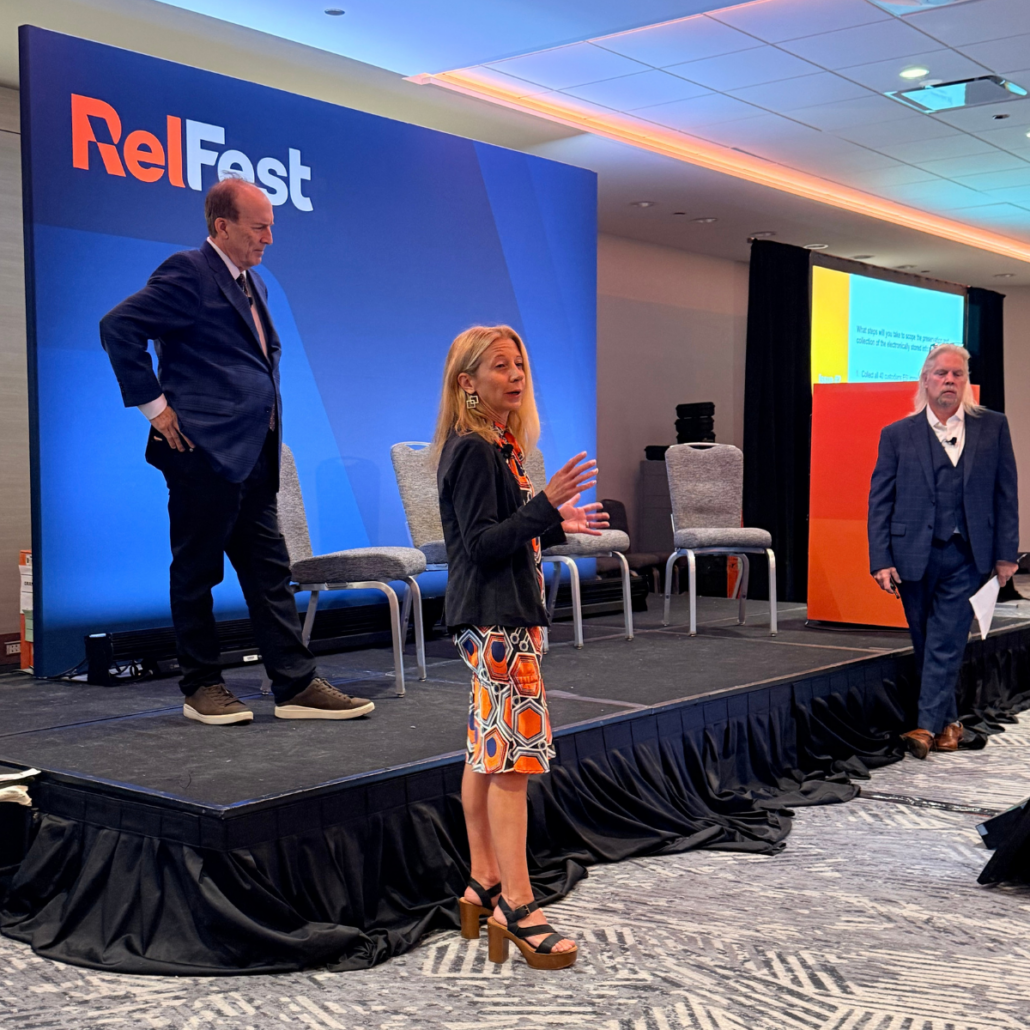
ACEDS put those questions to attendees during “Discovery Gone Wrong: Choose Your Own Disaster” at RelFest Chicago on October 1, 2026. ACEDS President Mike Quartararo moderated, joined by Cristin Traylor of Relativity and Stephanie Clerkin of Korein Tillery. Professor William Hamilton of the University of Florida Levin College of Law served as the hypothetical matter’s “judge.”
Clerkin offered an early alternative to the session title: “AKA Monday.”
Armed with red and green voting paddles, attendees worked through the scenario. Their comments turned the exercise into a discussion about making defensible decisions with incomplete facts, limited resources, and a missed deadline.
Who will put the legal hold into effect?
The audience favored issuing a legal hold first. Quartararo agreed, pointing to the risk of leaving preservation unaddressed. That choice opened up several questions. Who should receive the notice? Where did those people keep relevant information? Could the team reach someone with the access and authority to protect it?
A notice requires follow-through. Counsel needs enough information to define its scope. Paralegals and litigation support professionals need to understand the custodians and sources involved. IT needs instructions it can implement. Someone needs to track what has actually happened.
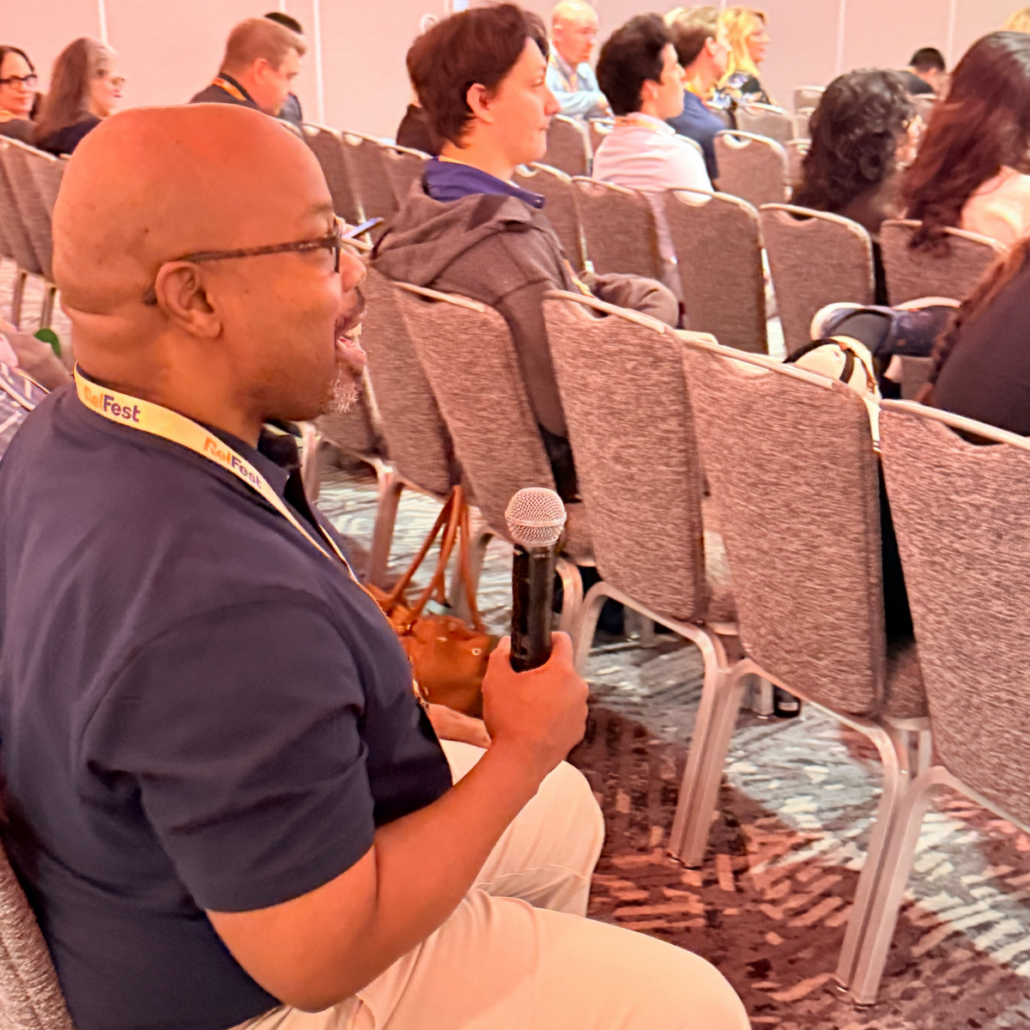
Hamilton pressed the room to investigate why the hold had never gone out and what previous counsel had done. He also considered whether IT could protect information immediately while the team worked through the details.
“We’re talking about a judgment,” he said.
The competing approaches reflected those unknowns. Traylor would combine several actions, including issuing the hold and gathering available information. Clerkin considered whether contacting opposing counsel could help establish a workable path forward.
Audience members widened the response further. One suggested calling the technology partner to confirm it could handle the data sources. Judge Peck, participating from the audience, urged counsel to do “as much as possible as soon as possible.”
The first task was to identify what could disappear and involve the people capable of protecting it.
A phased collection still needs a preservation plan
Prioritizing high-value custodians sounded sensible. Traylor and Clerkin both favored that approach when the discussion moved to collection.
Hamilton asked the harder question: How would the incoming team know who those custodians were?
That decision would require interviews and an understanding of where relevant information lived. It would also need a documented explanation. If information disappeared from a custodian lower on the list, the team would have to account for that loss. Prioritizing collection does not preserve the remaining relevant sources.
An audience member then challenged the assumption that the team had to collect information immediately to preserve it. Where the systems supported it, IT could preserve information in place and address automatic deletion while the team planned collections.

That distinction could materially change the weekend’s workload. Preservation protects information against loss or alteration. Collection gathers it for subsequent processing and review. Understanding the available preservation options helps the team decide which collections require immediate attention.
The suggestion that custodians collect their own information drew what Quartararo called a “sea of red.” For an incoming team, that approach raises questions about instructions, scope, and completeness. Those questions get even harder when the team has barely begun learning the matter.
Another attendee brought the discussion back to coordination: gather the right people, confirm availability, and assign the work. A collection strategy needs someone responsible for each part.
Choosing AI still leaves the workflow to design
The audience favored in-platform generative AI for review. That vote left several decisions unresolved. What would the system help identify? Which documents would people examine? How would the team evaluate the results? What could it accomplish within the client’s budget?
Clerkin described using generative AI to prioritize human review, potentially alongside continuous active learning. Traylor discussed using AI to process the documents quickly and confirmed she would validate the results.
Hamilton raised the data types, deadlines, and client expectations. An audience member added the cost question. Those details determine whether a proposed workflow is workable. A client expecting human review of every document needs a different conversation than one comfortable with a sampling approach. The team also needs to account for the people and time required to check results.
The audience offered a way to make progress: prepare an initial production from a manageable set of documents, with additional productions to follow. Quartararo agreed that rolling productions could be appropriate. That approach gave the team something concrete to discuss with opposing counsel while the remaining work continued.
Clerkin also reminded attendees that familiar tools still had a place. Search-term reports and domain filtering could help address parts of the problem. Each tool needed a purpose within the review.
What a clawback cannot undo
The privilege discussion sharpened the differences in perspective. The audience favored running search terms and withholding the hits. The panel discussed workflows that involved further evaluation of that material.
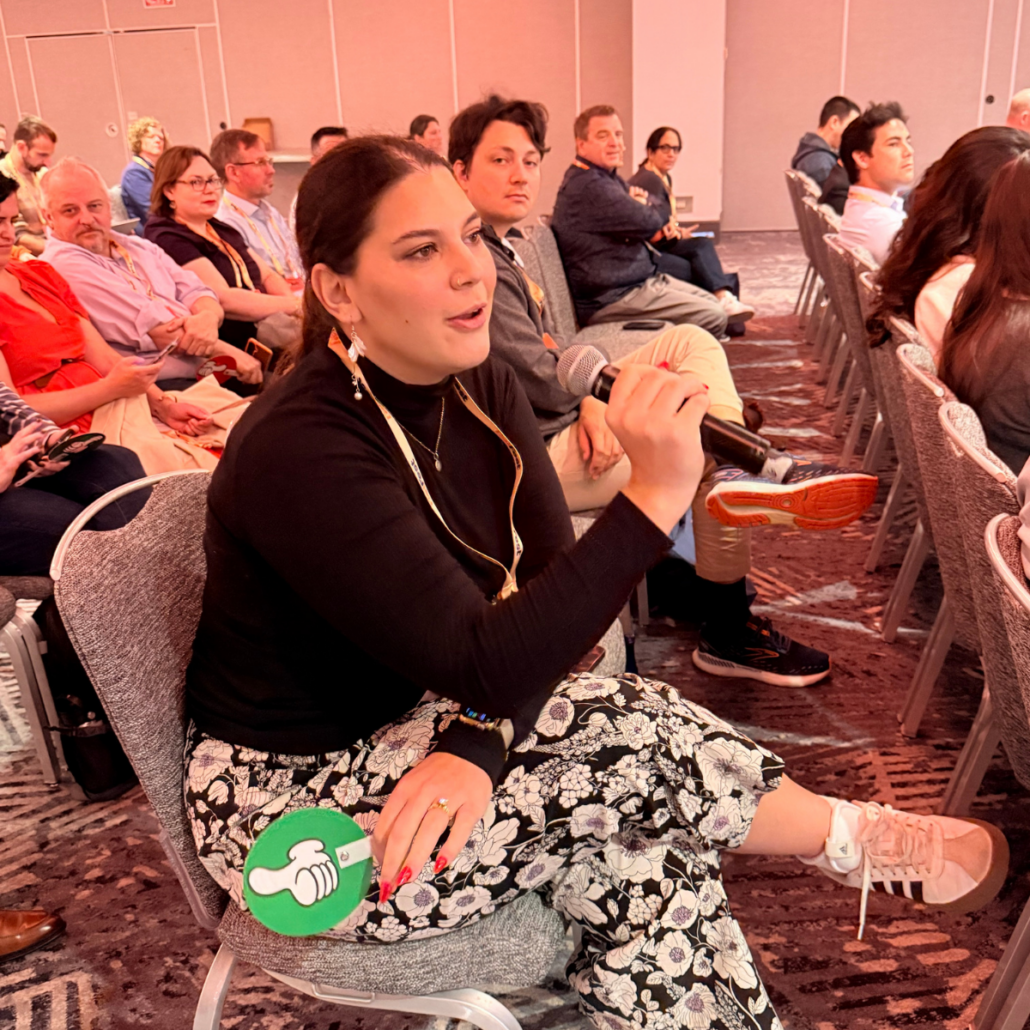
That distinction matters for anyone putting the approach into practice. A search-term hit identifies a document to examine. It does not establish privilege on its own. Traylor described combining search terms and AI to route documents for senior review, redactions, and sampling. Clerkin discussed separating potentially privileged material for additional review while moving forward with appropriate nonprivileged documents. Audience members added practical checks. One recommended examining email domains because initial searches might miss attorneys or organizations involved in privileged communications. Another described combining human coding and AI to support quality control.
Clawbacks prompted a more pointed exchange. Clerkin explained how substantial clawbacks can disrupt the receiving party’s deposition preparation and other work. Audience members emphasized the protections available through Federal Rule of Evidence 502(d).
The rule’s subsections address different circumstances. Rule 502(b) concerns inadvertent disclosure and includes conditions involving reasonable preventive and corrective steps. Rule 502(d) lets a federal court enter a nonwaiver order covering disclosures connected to the litigation, with protection extending to other federal or state proceedings. Teams need to understand the terms of the order governing their matter.
Traylor raised a practical consequence alongside those protections: opposing counsel may already have seen sensitive information.
“You can’t unring the bell,” she said.
That concern belongs in the client conversation. When deciding how to proceed, protection against waiver, the cost of review, and the consequences of disclosure all deserve attention.
What would your team have ready for Monday?
The audience supplied some of the session’s most useful questions. Could information be preserved in place? Had anyone accounted for cost? Who was coordinating the work? Could a reviewed set of documents be produced while other work continued?
For lawyers, paralegals, and eDiscovery professionals facing a similar situation, those questions offer a starting point:
- What information could disappear, and who can protect it?
- Why are we collecting from certain custodians first, and what happens to the other relevant sources?
- Who owns each task, and what can they realistically complete?
- How will we evaluate review results and address privilege?
- What can we responsibly produce first, and what remains to be done?
By Monday, the incoming team would need to explain its actions and the reasons behind them. The session gave attendees several approaches to consider and a better understanding of the questions each approach would require them to answer.
If that call came to your team at 4:47, who would you need on the phone first?