In legal tech and eDiscovery, few topics are drawing more attention than artificial intelligence. It is in headlines, product demos, conference sessions, and boardroom conversations. At the same time, automation is another topic that continues to gain traction in a more practical sense. That matters because while many organizations are exploring or actively implementing AI, a growing number of legal and eDiscovery professionals are asking a more immediate question: where can automation help us right now?
The truth is that AI and automation are related, but they are not interchangeable. Understanding the difference is more than an exercise in terminology. It helps shape buying decisions, workflows, staffing, training, risk management, and the way teams evaluate legal technology.
For eDiscovery professionals, legal operations teams, service providers, and law firms, the distinction matters because success does not come from chasing the newest shiny object. It comes from choosing the right tools for the right problems.
Why This Conversation Matters Now
The legal industry is under pressure from every direction. Teams are being asked to move faster, control costs, manage growing volumes of data, improve defensibility, and keep pace with evolving client expectations. In that environment, both AI and automation can create value, but in different ways.
Some organizations are already using AI in document review, analysis, summarization, contract work, and knowledge workflows. Others are still building confidence, governance, and use policies around it. Meanwhile, automation often feels more accessible because it solves the operational problems legal professionals face every day.
Think about the tasks that slow teams down:
- Routing requests
- Triggering legal hold notices
- Standardizing collection workflows
- Moving data between platforms
- Generating recurring reports
- Managing review assignments
- Flagging exceptions in structured processes
These are not futuristic problems. They are daily friction points. And this is where automation is becoming a bigger part of the conversation.
At its core, automation is the use of technology to perform repetitive, rules-based tasks with minimal manual intervention. In eDiscovery, automation is often about consistency, efficiency, and scale. It takes a process that a person would otherwise perform manually and automates it based on preset rules, logic, or triggers.
Examples of automation in legal tech and eDiscovery include:
- Automatically sending legal hold reminders on a schedule
- Routing custodial interview requests to the right stakeholders
- Triggering preservation steps when a matter opens
- Applying workflows to collections or processing jobs
- Assigning review batches according to predetermined rules
- Generating audit logs and status reports
- Escalating exceptions for missed deadlines
Automation does not necessarily “think.” It follows instructions. It is designed to reduce human effort, improve repeatability, and lower the chance of missed steps. That does not make it less sophisticated or less valuable. In fact, for many organizations, automation is one of the fastest ways to improve operational maturity.
AI is broader. It refers to systems designed to perform tasks that typically require human-like judgment, prediction, interpretation, or pattern recognition.
In legal tech, AI can power capabilities such as:
- Classifying documents based on their content
- Identifying relevant or privileged material
- Clustering similar content
- Extracting concepts, entities, or issues
- Summarizing documents or communications
- Answering questions across a data set
- Generating draft language based on prompts
Unlike traditional automation, AI often works probabilistically rather than strictly through fixed rules. It identifies patterns in data and produces outputs based on models, predictions, or learned relationships.
That is why AI can be powerful, but it is also why it requires more scrutiny. Legal professionals need to understand not only what the system can do, but also how results should be validated, governed, and used defensibly.
The Same but Different
Here is where confusion often happens. AI and automation are different, but they do overlap in important ways.
- Both are used to make work more efficient.
- Both can reduce the burden of manual, repetitive tasks.
- Both can help teams move faster and scale operations.
- Both can improve consistency when implemented well.
- Both require thoughtful governance, training, and oversight.
- Both can support better outcomes without replacing the need for human expertise.
In practice, legal teams often experience them as part of the same modernization effort. A team trying to improve matter intake, review efficiency, or data triage may encounter both automation tools and AI-driven capabilities along the way.
And in some products, they are already blended.
For example, an eDiscovery platform might automate workflow routing while using AI to classify documents within it. The user experiences a streamlined process, but behind the scenes, automation and AI are doing different jobs.
The simplest way to think about it is this: Automation executes. AI interprets.
Automation is best when the process is clear and repeatable. AI is best suited to tasks involving judgment, language, pattern recognition, or large-scale analysis.
Here are a few practical distinctions:
- Rules-based vs. probabilistic. Automation relies on explicit instructions. If X happens, do Y. AI often works by inference. Based on the data presented, the system predicts or recommends Z.
- Repeatable tasks vs. variable tasks. Automation is ideal for stable workflows that happen again and again. AI is useful when the work is less structured and requires analysis across changing inputs.
- Process improvement vs. insight generation. Automation improves how work gets done. AI can help uncover meaning, relevance, or priority within the work itself.
- Predictability vs. adaptability. Automation is highly predictable when rules are well-designed. AI can be more adaptive, but that also means its output may require more review and validation.
- Ease of adoption. Automation can sometimes be easier to adopt because teams can map it directly to existing processes. AI often requires additional conversations around data quality, policy, transparency, defensibility, and trust.
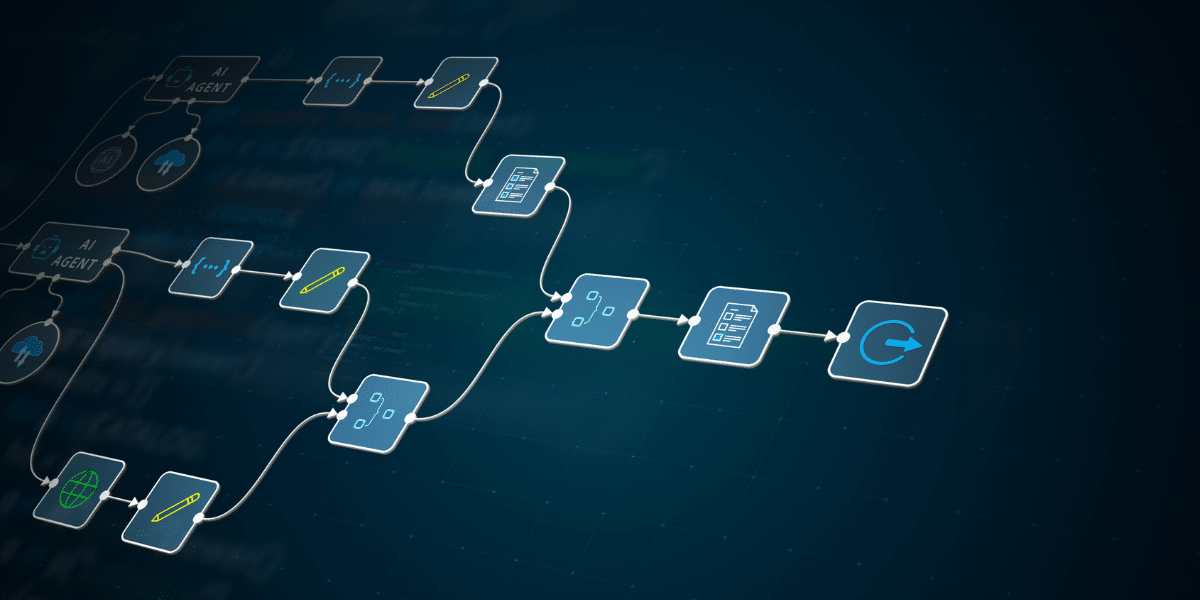
There is also a growing conversation around agentic AI, which adds another layer to this discussion. Unlike traditional AI tools that analyze, classify, or generate outputs in response to prompts, agentic AI is designed to perform an action across steps in a workflow. In that sense, it may intersect with automation. But even as these capabilities evolve, the core distinction still matters—automation is rooted in predefined rules and workflow execution, while AI brings reasoning, interpretation, and adaptability to the process.
Automation is Getting More Attention
AI may dominate the spotlight, but automation is getting more attention because it addresses one of the biggest needs in legal operations and eDiscovery: practical workflow improvement.
Many teams are asking questions like:
- How do we reduce bottlenecks?
- How do we do more with leaner teams?
- How do we minimize human error?
- How do we make our workflows more defensible and repeatable?
- How do we get better value from the technology we already have?
Automation is often the answer to these questions.
It also helps organizations create a stronger foundation for future AI adoption. If workflows are inconsistent, poorly documented, or overly manual, layering AI on top of them does not automatically fix the problem. In some cases, it can amplify inefficiencies or create new risks.
Automation can help organizations standardize their processes first. That creates cleaner handoffs, more reliable data, and a better environment for using AI responsibly.
This or That?
One of the biggest mistakes organizations can make is assuming they need to choose between AI and automation.
They do not.
The real opportunity is to understand where AI and automation fit across eDiscovery, investigations, data breach response, and legal operations, and how they can work together to strengthen both efficiency and decision-making.
For example:
- Automation can trigger legal hold, preservation, collection, notification, and escalation workflows
- AI can help analyze collected data for relevance, patterns, themes, privilege, risk, or potential anomalies
- Automation can route matters, tasks, approvals, and updates to the right stakeholders at the right time
- AI can assist with summarization, categorization, prioritization, and early insight generation across large volumes of information
- Automation can support incident response processes through deadline tracking, reporting steps, and cross-functional coordination
- AI can help surface unusual activity, identify key facts more quickly, and support faster assessment in investigations and breach response
- Automation can generate status reports, audit trails, and recurring communications
- AI can help turn that information into more meaningful insights for legal, compliance, security, and operations teams
The strongest legal tech strategies aren’t built around buzzwords. They are built around workflows, business goals, defensibility, and the practical needs of the teams doing the work.
Whether a solution is positioned as AI, automation, or both, legal teams should ask smart questions before moving forward.
- What problem are we solving? Start there. Not every challenge needs AI. Not every manual task needs automation. The point is to solve real workflow and business problems, not to check a technology box.
- Is this process rules-based or judgment-based? If it is repetitive and predictable, automation may be the right fit. If it depends on language, meaning, or pattern recognition, AI may be more useful.
- What does success look like? Faster review? More consistent workflows? Better quality control? Lower costs? Stronger defensibility? Define measurable outcomes early.
- How much oversight is required? Every legal technology implementation should have human accountability. But AI-driven tools may require added validation, monitoring, and governance depending on the use case.
- Can this work with our existing people and processes? The best technology is the one your team can use effectively. Adoption depends on training, change management, and realistic implementation planning.
- Are we buying innovation or buying clarity? Sometimes the most valuable solution is not the flashiest one. It is the one that makes the work easier, cleaner, and more defensible.
Education Matters
As legal technology evolves, professionals need more than headlines, product claims, and buzzworthy terminology. They need practical guidance to help them evaluate tools, understand use cases, and make decisions that align with defensibility, efficiency, and business goals.
That is especially true as conversations around AI continue to expand while automation becomes a more immediate area of focus for many teams. Legal professionals have to separate innovation from marketing language, identify what is actually useful, and determine what can realistically be implemented within their organizations.
This moment calls for ongoing education, thoughtful discussion, and a stronger understanding of how these technologies fit into real legal workflows. The more informed professionals are, the better equipped they will be to ask sharper questions, manage risk, and make technology decisions with confidence.
Final takeaway
AI and automation are not the same, even though they may be discussed together.
Automation is about executing tasks efficiently and consistently.
AI is about interpreting information and supporting analysis at scale.
Both can create value.
Both require oversight.
Both are reshaping legal tech and eDiscovery.
For today’s legal professionals, the smarter question is not whether AI is more important than automation. The smarter question is where each can deliver the most meaningful impact. Because in this market, progress is not about adopting technology for its own sake. It is about building workflows and capabilities that help legal teams work more effectively, serve clients better, and stay prepared for what comes next.
And that starts with understanding the difference.